

VS vs. VVS Diamond Earrings: What Changes and What You Will See
To the unaided eye, VS and VVS diamond earrings look the same. Here is what the two clarity grades mean, what changes in price, and how the choice works on Icebox studs that offer both.
In this guide
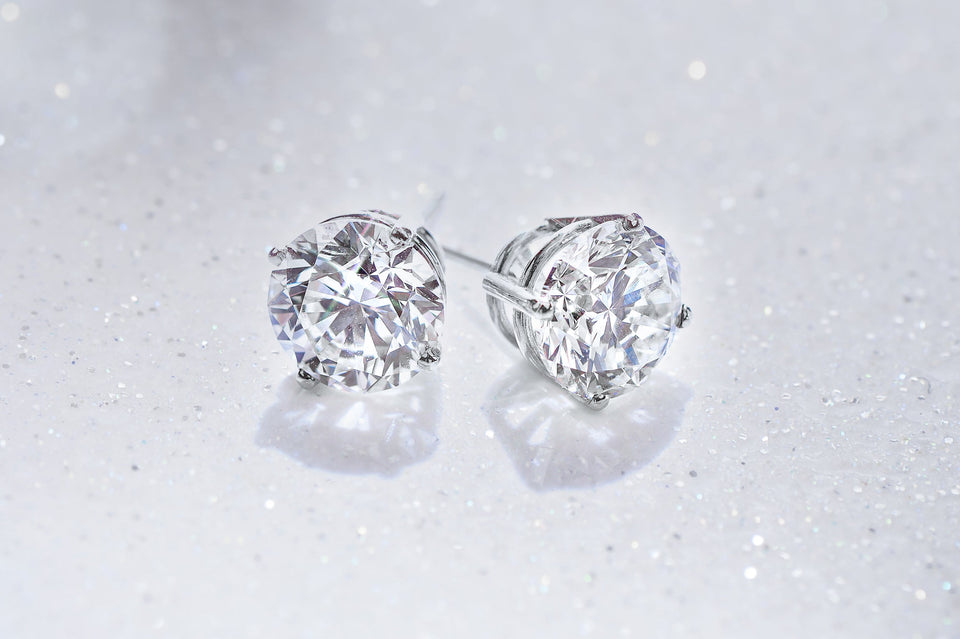
For diamond earrings, VS and VVS clarity look the same to the unaided eye. GIA, which created the clarity scale, says that in almost all cases the inclusions in both grades cannot be seen without magnification, so the choice comes down to budget, origin and how much rarity matters to you, not to what you will see in the mirror.
This guide explains what the two grades mean, what changes in price, and how the choice works on the Icebox studs that offer both.
What VS and VVS mean
Clarity describes the tiny internal features (inclusions) and surface marks (blemishes) inside almost every diamond. On the GIA clarity scale, every diamond is judged under 10x magnification, the standard jeweler's loupe, and placed in one of 11 grades. VVS and VS sit in the upper middle of that scale.
| Grade | Full name | What a grader sees at 10x (GIA) |
|---|---|---|
| FL / IF | Flawless / Internally Flawless | No inclusions visible; IF stones may show insignificant surface blemishes |
| VVS1 / VVS2 | Very, Very Slightly Included | Minute inclusions, extremely difficult (VVS1) to very difficult (VVS2) to see |
| VS1 / VS2 | Very Slightly Included | Minor inclusions, difficult (VS1) to somewhat easy (VS2) to see |
| SI1 / SI2 | Slightly Included | Noticeable inclusions, easy to very easy to see at 10x, usually not visible to the eye |
| I1 / I2 / I3 | Included | Obvious inclusions, often visible without magnification |
Grade descriptions summarized from GIA's VVS versus VS clarity guide.
The difference between the two grades is how hard a trained grader has to work to find an inclusion under magnification. It is not a difference you can see across a room, or even up close. GIA notes that a diamond with an inclusion visible to the eye would not receive a VVS grade, and that only in very rare cases does a large VS stone show one. In earrings, where stones are small and seen at a distance, that rare case becomes even less of a concern.
What changes when you move up to VVS
- Price. All else being equal, VVS costs more than VS. On the Icebox studs that offer both grades, the natural VVS version was priced roughly 10 to 14 percent above the natural VS version at publication. Check the listing for the current figure.
- Rarity. VVS diamonds are closer to flawless and less common. For some buyers, especially for a gift or milestone, that is the point.
- Appearance. To the unaided eye, nothing changes. Cut, color and the setting have a far larger effect on how much a stud sparkles.
How it works on Icebox studs
Most Icebox diamond earrings are made with VS diamonds. A group of 14K gold studs adds a VVS option, and on those styles VVS is offered with natural diamonds only. The laboratory-grown diamond versions are VS.
| Style | Total carat weight (per pair) | Clarity choices |
|---|---|---|
| Bezel Set Halo Diamond Stud Earrings 0.50ctw | 0.50ctw | Laboratory-grown VS; natural VS or VVS |
| Bezel Set Halo Diamond Stud Earrings | 0.75ctw | Laboratory-grown VS; natural VS or VVS |
| Milgrain Flower Cluster Diamond Stud Earrings 0.25ctw | 0.25ctw | Laboratory-grown VS; natural VS or VVS |
| Two Layer Cluster Halo Diamond Stud Earrings | 0.75ctw | Laboratory-grown VS; natural VS or VVS |
| Quad Center Diamond Halo Rope Border Stud Earrings | 0.50ctw | Laboratory-grown VS; natural VS or VVS |
Two details matter when reading these listings. First, CTW is the combined weight of every diamond in the pair, not the size of a single stone. A 0.50ctw halo stud spreads that weight across a center diamond and a ring of smaller ones in each earring. Second, the clarity grade describes the selected variant, so confirm the clarity, the diamond origin and the gold color on the exact option you choose before you check out.
Which should you choose?
Choose VS if
- You want the best visual result for your budget. The difference can go toward a larger carat weight, a halo design, or natural instead of laboratory-grown diamonds.
- You prefer laboratory-grown diamonds. On the styles above, laboratory-grown versions are VS.
- The studs are for everyday wear, where nobody will view them under a loupe.
Choose VVS if
- You want natural diamonds of a higher, rarer clarity grade and the meaning of that matters to you or the person receiving them.
- You are matching another piece with VVS diamonds and want the grades to align.
- The price difference on the style you like is comfortable.
GIA's own advice points the same way: clarity is only one factor, and the savings from a VS stone can go toward size, color or cut.
Frequently asked questions
Can I tell VS and VVS apart by looking?
No. GIA describes VS stones as virtually indistinguishable from VVS diamonds to the unaided eye. The difference is found under 10x magnification by a trained grader.
Do laboratory-grown diamonds use the same clarity grades?
Yes. Laboratory-grown diamonds have the same crystal structure as natural diamonds and are described with the same clarity terms. The origin should always be stated clearly, and on Icebox listings it is a separate option from clarity.
Does clarity affect how long earrings last?
Not at VS or VVS. GIA links durability concerns to the lowest Included grades, where obvious inclusions can affect a stone. For keeping studs secure and bright, see Icebox Care & Repair.
Can I compare them in person?
Yes. At the Icebox Atlanta Flagship you can see stud sizes and designs side by side before you decide.
Ready to choose? Browse the full Earrings collection, or the Men's Earrings collection.
Clarity options, diamond origins and carat weights are taken from the Icebox product listings at publication and may change. Grade definitions are from GIA.